
Meet Valerie, who shares her story of living with phenylketonuria (PKU). Valerie discusses the challenges of managing the condition throughout her life and the emotional, physical, and systemic barriers that impact daily care.
Meet Zach, who shares his story of living with myasthenia gravis (MG). Zach discusses the challenges of delayed diagnosis, the cost of care, and how redefining his “new normal” has allowed him to find purpose and continue thriving.
Meet Troyce, who shares her story of living with hereditary angioedema (HAE). Troyce discusses the dangers of delayed diagnosis, the impact of living with a life‑threatening condition, and how access to treatment and community support changed her life.
In this episode of Unscripted, the AMCP podcast, we talk with Jeffrey Dunn, PharmD, MBA, President and CEO of Cooperative Benefits Group, about the rapidly evolving treatment landscape for HER2-positive biliary tract cancer (BTC) and its implications for managed care. The discussion covers the importance of biomarker testing and molecular profiling in guiding targeted therapy, key NCCN guideline considerations across lines of treatment, and the clinical and economic impact of timely access to HER2-directed therapies. We also discuss payer-provider collaboration strategies to improve testing, coverage alignment, and patient access in this rare and aggressive form of cancer.
Meet Tracy, who shares her story of living with thalassemia. Tracy discusses the realities of managing the condition over a lifetime and the impact it has had on her health, her family, and daily life.
Meet Nicki, who shares her story of living with Excessive Daytime Sleepiness (EDS). Nicki discusses the daily impacts of dealing with the rare disease and the physical and social implications is causes.
In this last installment of our rare disease series, we speak with Angela Luong, PharmD, Senior Clinical Consultant at Pharmaceutical Strategies Group. Our discussion focuses on the burden of sickle cell disease, chronic pain management, limited treatment options, and the implications for managed care programs, including the use of data and care coordination to improve patient outcomes. This activity is supported by an independent medical education grant from Agios Pharmaceuticals, Inc. AMCP offers CPE for this podcast through December 31, 2026.
This episode continues AMCP’s rare disease series with an in-depth look at IgA nephropathy (IgAN), a progressive autoimmune kidney disease that often goes undiagnosed until advanced stages. We speak with Ami Gopalan, Senior Vice President of Strategic Content and Growth Optimization at Precision AQ. As a patient living with IgAN, Ami brings both a professional and personal perspective to the discussion as we explore the disease’s silent progression, the burden it places on patients and families, the evolving treatment landscape, and how managed care can better incorporate patient value, clinical guidelines, and emerging evidence to support long-term outcomes. This podcast is supported by an independent medical education grant from Alexion and AstraZeneca Rare Disease. AMCP offers CPE for this podcast through December 31, 2026.
In this episode of Unscripted, we continue our rare disease series with a focus on hemophilia and the substantial clinical, financial, and psychosocial burdens it places on patients and families. We speak with Janna Evans, Director of Pharmacy Sales Support at Blue Cross and Blue Shield of Texas, who discusses how health plans manage high-cost therapies, balance individualized patient needs with access requirements, and navigate prior authorization and step-therapy processes. She also highlights the need for better patient-reported outcomes, the day-to-day impact of the disease, and the broader considerations for employers and caregivers within managed care.
This activity is supported by an independent medical education grant from Genentech Inc., and Pfizer Inc.
In this episode of Unscripted, AMCP explores vitiligo as a complex autoimmune disease with significant psychosocial and clinical implications. Dr. Iltefat Hamzavi, MD, FADD discusses the burden of delayed diagnosis, the societal and emotional challenges patients face, and the importance of early, individualized treatment. He outlines current therapeutic approaches—including topical agents, phototherapy, systemic options, and surgical interventions—and highlights the condition’s associations with other autoimmune diseases. The conversation underscores how education, support, and emerging medical advances are reshaping outcomes and quality of life for people living with vitiligo.
This podcast is sponsored by AbbVie.
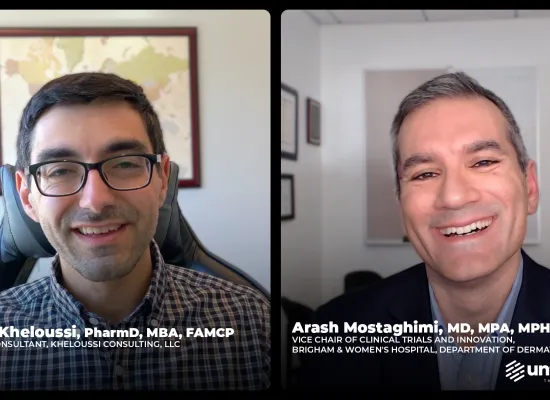
In this episode of Unscripted, we speak with Steve Kheloussi, PharmD, MBA, FAMCP, Principal Consultant at Kheloussi Consulting, LLC, in the first installment of our four-part series on rare diseases. We discuss a practical overview of Duchenne muscular dystrophy (DMD), the current treatment landscape, and the evidence gaps that complicate payer decision-making. We also touch on the importance of what patients and caregivers need to maintain function, reduce fatigue, and navigate the significant emotional and practical burdens of care.
This podcast is supported by an independent medical education grant from ITF Therapeutics. AMCP offers CPE for this podcast through December 31, 2026. For additional information and to claim credit, please visit: The Power of Partnership: Bridging Patients and Payers in Duchenne Muscular Dystrophy Management.
In this episode of Unscripted, we talk with Marty Acevedo, MS, RD, Patient Advocate and President & Board Chair of the Parkinson’s Association of San Diego. Marty shares her personal journey with Parkinson’s disease—from a delayed diagnosis to managing symptoms, treatment decisions, and the impact on daily life. She discusses the importance of individualized care, the essential role of caregivers, and the value of evidence-based resources. Marty also highlights her involvement in the Michael J. Fox Foundation’s Parkinson's Progression Markers Initiative (PPMI) research study and offers perspective on emerging advances and potential disease-modifying therapies that may shape the future of Parkinson’s care.