In this video, Alison, a mother, shares her family’s experience after two of her three sons, Noah and Hunter, were diagnosed with Duchenne muscular dystrophy (DMD). DMD is a rare, progressive genetic disorder that causes muscle weakness and loss of mobility. Alison describes the shock of her sons’ diagnoses, the hope that emerging gene therapies offer, and the work of navigating care, exploring treatment options, and advocating for her children. Alison reflects on the role managed care professionals play in helping patients and families access the specialized care and treatments they need. Encouraged by improvements following therapy, she remains hopeful that Noah and Hunter can keep enjoying their childhood and pursuing their dreams.
In this video, Fabiana, a mother from South Jersey, shares her experience living with Cushing syndrome, a rare endocrine disorder that occurs when the body produces too much cortisol and is also known as hypercortisolism. Her symptoms started at age 16, and she spent six years searching for answers before she was diagnosed. She describes multiple surgeries, ongoing treatment, and what it takes to manage her condition, including lifelong hormone replacement therapy. Fabiana reflects on the role managed care professionals play in improving access to essential medications and connecting patients with financial assistance programs. Through her work with the Cushing’s Support and Research Foundation, she helps others navigate their own journeys while looking forward to a future with her family.
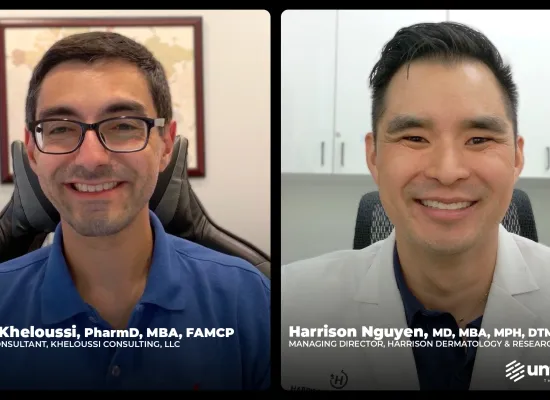
In this episode of AMCP Unscripted, the AMCP podcast, guest host Steve Kheloussi, PharmD, MBA, FAMCP, talks with Harrison Nguyen, MD, MBA, MPH, FAAD, a double board-certified dermatologist in Houston, about psoriasis as a systemic inflammatory disease and what that means for treatment goals and coverage decisions.
In Episode 68 of Unscripted, the AMCP podcast, pediatric gastroenterologist Dr. Jason Dranove of Atrium Health Levine Children's Hospital joins guest host Jessica Fann of Vanderbilt Specialty Pharmacy to explain how the two conditions differ, why standard laxatives often fall short on pain and incontinence, and what the expanded pediatric indication for Linzess (linaclotide) means for patients, providers, and managed care. AMCP produces Unscripted to connect managed care pharmacy professionals with the clinicians and evidence behind treatment and access decisions.
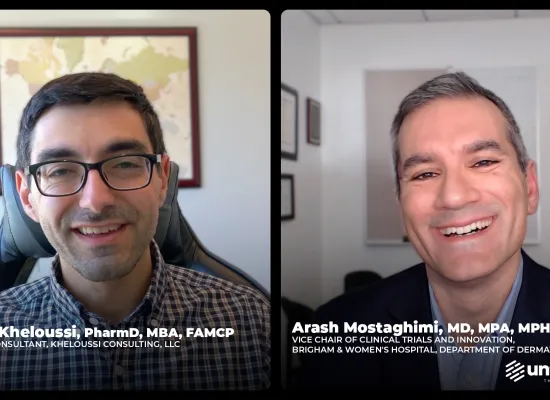
In this episode of Unscripted, guest host Steve Kheloussi, PharmD, MBA, FAMCP, welcomes returning guest Dr. Arash Mostaghimi, MD, MPA, MPH, Associate Professor of Dermatology at Harvard Medical School and Vice Chair of Clinical Trials and Innovation and Director of the Dermatology Inpatient Service at Brigham and Women’s Hospital, to discuss the rapidly evolving treatment landscape for alopecia areata. Once a condition with no FDA-approved therapies, alopecia areata now has three approved JAK inhibitors—with a fourth potentially on the horizon—and new clinical guidelines that may reshape how disease severity is defined and treated. Dr. Mostaghimi explains why traditional measures such as SALT scores may not fully capture the burden of disease, how the new AASC framework incorporates psychosocial impact, and what these changes could mean for coverage decisions, step therapy requirements, and formulary management. Sponsored by AbbVie, Inc.
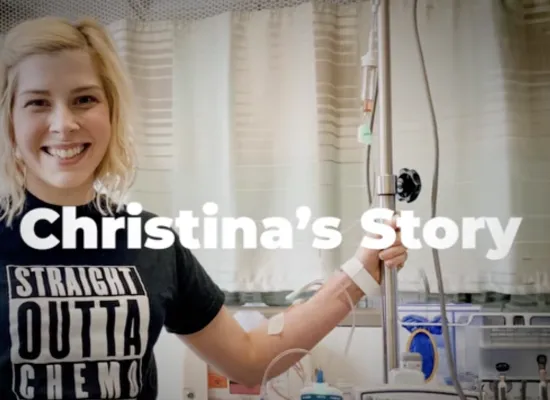
In this video, Christina, an artist, educator, and self-described "accidental advocate," shares her experience living with a desmoid tumor, a rare, locally invasive soft tissue tumor that forms in the body's connective tissue and is also known as aggressive fibromatosis or desmoid-type fibromatosis. She describes the uncertainty of her initial diagnosis, the multiple treatments that did not work, and finding a therapy that has helped keep her tumor stable.
As psychedelic-assisted therapies move closer to potential use in treating treatment-resistant depression (TRD), health plans, pharmacy benefit managers, and other managed care stakeholders are beginning to evaluate how these therapies could fit within existing coverage, reimbursement, and care delivery models. A new Journal of Managed Care + Specialty Pharmacy (JMCP) supplement from AMCP Market Insights provides a roadmap for many of the questions payers may face as innovative therapies enter the depression treatment landscape.
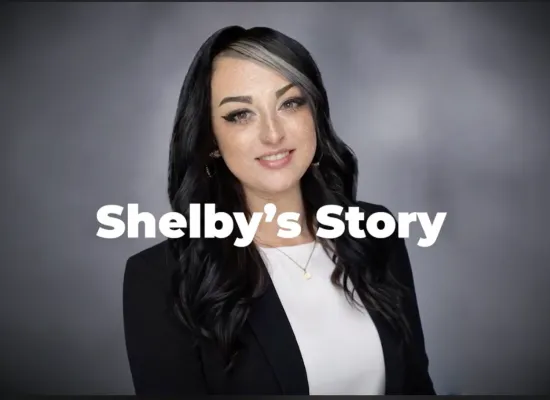
In this video, Shelby Cole shares her experience living with narcolepsy type one with cataplexy, a chronic neurological disorder that affects the body’s ability to regulate sleep and wake cycles.
In this video, Jessica of Chadds Ford, Pennsylvania, shares her journey living with eosinophilic esophagitis (EOE), a chronic inflammatory condition that causes difficulty swallowing and food impactions. After years of symptoms that were initially treated as acid reflux, a biopsy finally confirmed her diagnosis.
In this episode of Unscripted, the AMCP podcast, we talk with Jeffrey Dunn, PharmD, MBA, President and CEO of Cooperative Benefits Group, about the rapidly evolving treatment landscape for HER2-positive biliary tract cancer (BTC) and its implications for managed care. The discussion covers the importance of biomarker testing and molecular profiling in guiding targeted therapy, key NCCN guideline considerations across lines of treatment, and the clinical and economic impact of timely access to HER2-directed therapies. We also discuss payer-provider collaboration strategies to improve testing, coverage alignment, and patient access in this rare and aggressive form of cancer.
Meet Tracy, who shares her story of living with thalassemia. Tracy discusses the realities of managing the condition over a lifetime and the impact it has had on her health, her family, and daily life.