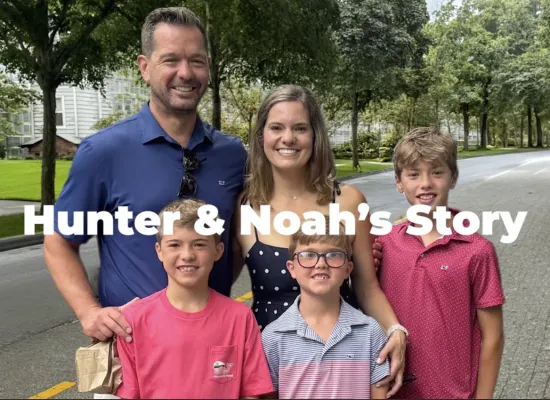
In this video, Alison, a mother, shares her family’s experience after two of her three sons, Noah and Hunter, were diagnosed with Duchenne muscular dystrophy (DMD).
In this video, Sean shares his experience living with myotonic dystrophy type 1 (DM1), a progressive, inherited form of muscular dystrophy that affects multiple systems throughout the body and is also known as Steinert disease. His early symptoms went unrecognized, and he wasn’t diagnosed until age 40. He describes the challenges of managing his condition, navigating specialized care, and adapting to a life he hadn’t anticipated. Sean reflects on the role managed care professionals play in helping patients access appropriate care and emerging treatments. Through patient advocacy and support from the Myotonic Dystrophy Foundation, he has found renewed purpose, along with hope for therapies that could help future generations.
AMCP's Patient Journey Collection shares real patient experiences with disease, treatment, health care access, and the health care system to help managed care professionals and health care decision-makers better understand the patient perspective and the role they play in improving access and outcomes. These patient stories are part of the award-winning AMCP Patient Voice Initiative. These stories amplify the patient voice, driving meaningful change in medication access and care, while raising awareness, influencing policies, and empowering others facing similar challenges. To add your story or to discuss opportunities to support the patient voice initiative, contact our team.
This activity is supported by an independent medical education grant from Dyne Therapeutics, Inc.
Transcript:
Shaun: My name is Shaun. I live in the mountains just outside of Asheville, North Carolina, on a little farm with my wife and dog and about 50 chickens, and I have myotonic dystrophy type one. So myotonic dystrophy type one, it's a inherited genetic disease that you can get from just one parent. It's a multi-system disease.
It causes muscle atrophy and dysfunction. It affects our heart's electrical system. It impacts our breathing muscles. It impacts our digestive systems, our minds. It's a little different for each person, but it can, it impacts quite a lot of things. In hindsight, I probably had symptoms dating back to my teens.
Things like my grip wouldn't release on occasion. I couldn't jump as my peers could, and my hands would sometimes just clench up. They didn't really affect my life, and I didn't really think it was anything to talk to a doctor about. But around 40 years old, I started having more serious symptoms that were really affecting my life.
I was out at one of my job sites working on a stream restoration project. I couldn't figure out what elevation needed to be at that next point, and I, I could not do that math problem. I suddenly just could not. I couldn't do the simple arithmetic, and I'd done that thousands of times for many years.
That's when I said, "There's something wrong." That's when I called my doctor's office. The new guy went through my records, you know, 10 years' worth of medical records from seeing the previous doctor, and he said, "Shaun, do you still have clenching in your hands? Do you have clenching in your jaw? You do still have frontal balding.
You still have atrophy in your temples." And I said, "Yes, I still have this. I still have that. I still have that. This is worse. This is worse. This is worse." And, uh, the doctor said, "Shaun, I'd like you to come in tomorrow morning to get a blood draw. We're gonna send a sample to a genetics lab." And the Type 1 came back positive about five weeks later.
So yeah, that's when my real journey began. After I got diagnosed, and my doctor right away said, "Shaun, we need to get you to a bigger medical system, and you need to look for a neurologist who knows about this disease," I have a whole slew of doctors now. I have a neurologist, a pulmonologist, a cardiologist, a speech language pathologist, a physical therapist.
Yeah, I've got all of them. Unfortunately, with this disease, there, there's not, like, a pill you can take. There's not a treatment you can take. There's no infusions. There's no, "Okay, you've got this disease. Take this medicine." I'm on one medication that helps with hand opening time. It does help a little bit with my breathing muscles.
It used to be much more severe than it is at the moment, but it doesn't do anything with clenching in my face. Nothing for the atrophy. Nothing for the, my brain matter. Nothing. One thing I'd say to healthcare providers and researchers in the pharmacy community about this disease is that time for us is muscle loss, is mental capacity loss, it's stuff that we don't get back.
One thing I talk with a lot with folks who are newly diagnosed is being advocates for themselves and their healthcare. Help them learn of the resources that the Myotonic Dystrophy Foundation provides for learning about taking care of your health, specialists to see, the type of symptoms to look out for, the more dangerous symptoms to try to stay ahead of.
If it wasn't for finding them, I would literally be sitting here by myself knowing very little about this disease. My plans, hopes, they've changed a lot. Used to be keep restoring streams, run my business, grow my business, help my community. Now, my hopes are to better advocate for the myotonic dystrophy community, to root on the researchers and the drug developers.
Now seeing that there are, you know, several drugs in the works when 10 years ago there was almost no drugs in trial phase, but now there's several, that's super hopeful. I really hope that they come out soon enough for the next generation or younger folks now, that it'll really make a difference for them.
So yeah, that's what I'm hopeful for. My name's Shaun, and I'm living with myotonic dystrophy Type 1.
AMCP offers a wide variety of educational opportunities, from events and webinars to online training.