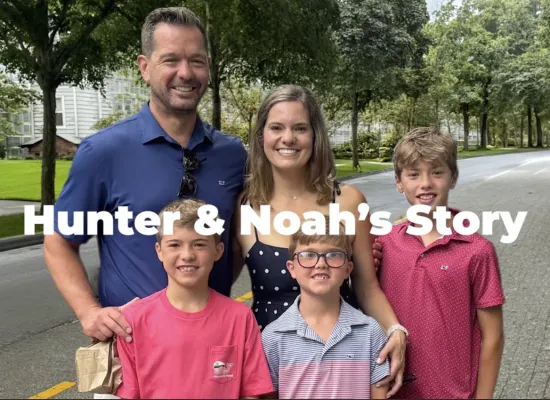
In this video, Alison, a mother, shares her family’s experience after two of her three sons, Noah and Hunter, were diagnosed with Duchenne muscular dystrophy (DMD).
In this video, Fabiana, a mother from South Jersey, shares her experience living with Cushing syndrome, a rare endocrine disorder that occurs when the body produces too much cortisol and is also known as hypercortisolism. Her symptoms started at age 16, and she spent six years searching for answers before she was diagnosed. She describes multiple surgeries, ongoing treatment, and what it takes to manage her condition, including lifelong hormone replacement therapy. Fabiana reflects on the role managed care professionals play in improving access to essential medications and connecting patients with financial assistance programs. Through her work with the Cushing’s Support and Research Foundation, she helps others navigate their own journeys while looking forward to a future with her family.
AMCP's Patient Journey Collection shares real patient experiences with disease, treatment, health care access, and the health care system to help managed care professionals and health care decision-makers better understand the patient perspective and the role they play in improving access and outcomes. These patient stories are part of the award-winning AMCP Patient Voice Initiative. These stories amplify the patient voice, driving meaningful change in medication access and care, while raising awareness, influencing policies, and empowering others facing similar challenges. To add your story or to discuss opportunities to support the patient voice initiative, contact our team.
This activity is supported by an independent medical education grant from Recordati Rare Diseases, Inc
Transcript:
Fabiana: I'm Fabiana. I live in South Jersey with my husband and two boys, and I'm living with Cushing syndrome. Cushing syndrome is a rare endocrine disorder. It can occur from two different sources, a pituitary tumor, which causes the adrenal glands to secrete an excessive amount of cortisol, which is a necessary for life hormone.
It can also occur from small tumors on the adrenal glands. Cushing's can have lifelong impact. It can cause extreme fatigue, excessive weight gain, acne, excessive hair growth, menstrual irregularities, and also cognitive decline and mood disorders. In 1997, I was 16 years old and I started seeing symptoms that I didn't know at the time was Cushing's.
My periods had stopped. I was getting excessive body and facial hair. The hair on my head was starting to thin. My face shape was also changing. It was starting to get rounder and redder. So over the years, without a diagnosis, more and more symptoms began showing up. It took six years of going to a variety of different doctors, nutritionists, therapists, to finally get the correct test that showed that I did have a pituitary tumor and all of my blood work came back to confirm that it was Cushing's disease.
Within a few months, I was able to see a neurosurgeon who successfully removed the tumor. After I had my surgery, I had to start taking a very high dose of steroid because you can't go from very high levels to very low levels of cortisol. You will have something that's called an adrenal crisis, which is life-threatening.
It's a very slow tapering process as your body starts to basically wean off of cortisol. By the time I was 27 or 28, I started having symptoms again that Cushing's was back. So I did have a second pituitary surgery and the removal of my adrenal glands. So now I have adrenal insufficiency with a Cushing's tumor.
I take eight different medications. I take steroids to replace the hormones that my adrenals would produce, as well as all of the hormones that my pituitary produces. I currently work for the Cushing's Support and Research Foundation, and there I work very closely with a good number of patients. So for the managed care community, I would say a lot of my patients are having difficulty accessing these medications, and because of my role, I'm able to send them grants through a variety of organizations that I've been educated in.
However, many patients are not aware of these subsidy programs that are available. When you're in the throes of Cushing's, it's a lot of work to try to find these things and then apply for them. It's really important that we have more information coming from our doctors that these types of things are available.
I'm looking forward to keeping up with my boys and helping other patients navigate this journey so that they don't feel alone. I'm Fabiana, and I'm living with Cushing syndrome.
AMCP offers a wide variety of educational opportunities, from events and webinars to online training.