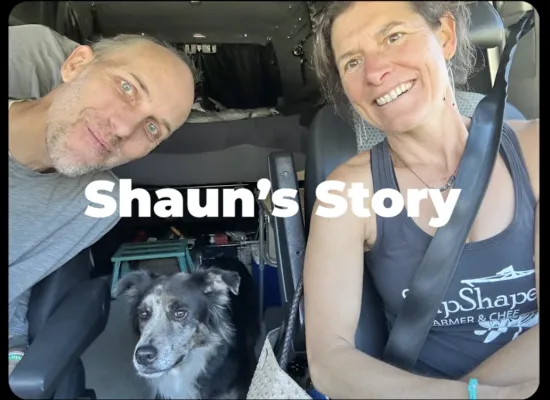
In this video, Sean shares his experience living with myotonic dystrophy type 1 (DM1), a progressive, inherited form of muscular dystrophy that affects multiple systems throughout the body and is also known as Steinert disease.
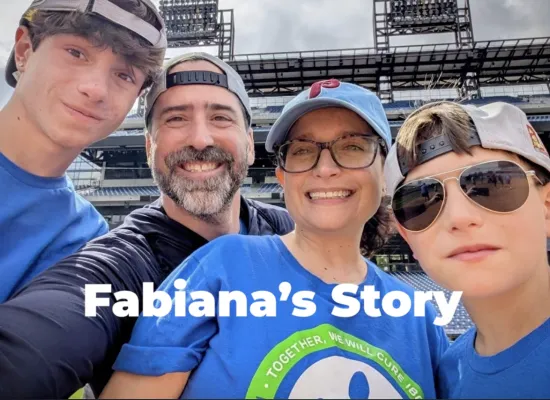
In this video, Alison, a mother, shares her family’s experience after two of her three sons, Noah and Hunter, were diagnosed with Duchenne muscular dystrophy (DMD). DMD is a rare, progressive genetic disorder that causes muscle weakness and loss of mobility. Alison describes the shock of her sons’ diagnoses, the hope that emerging gene therapies offer, and the work of navigating care, exploring treatment options, and advocating for her children. Alison reflects on the role managed care professionals play in helping patients and families access the specialized care and treatments they need. Encouraged by improvements following therapy, she remains hopeful that Noah and Hunter can keep enjoying their childhood and pursuing their dreams.
AMCP's Patient Journey Collection shares real patient experiences with disease, treatment, health care access, and the health care system to help managed care professionals and health care decision-makers better understand the patient perspective and the role they play in improving access and outcomes. These patient stories are part of the award-winning AMCP Patient Voice Initiative. These stories amplify the patient voice, driving meaningful change in medication access and care, while raising awareness, influencing policies, and empowering others facing similar challenges. To add your story or to discuss opportunities to support the patient voice initiative, contact our team.
This activity is supported by an independent medical education grant from Dyne Therapeutics, Inc.
Transcript:
Alison: I am Alison Joseph. I, along with my husband, have three sons, Noah, who is 10, Hunter, who is 11, and Carter, who is 13. My two younger sons both have Duchenne muscular dystrophy. Duchenne is a progressive muscle wasting disorder, and people affected with Duchenne are missing a protein in their muscle that helps muscle rebuild after it is damaged.
Normal everyday activities, running, jumping, going up and down stairs, you have a certain degree of muscle breakdown. In their muscle, instead of rebuilding, turns into scar tissue. So boys with muscular dystrophy first lose the ability to run, walk, and then they eventually lose their upper extremity, ability to feed themselves, write, all those things.
Duchenne is a fatal disease. Currently, there are no cures for Duchenne muscular dystrophy. In 2017, my son Hunter, when he was three years old, had an accident, and we ended up spending a night in a pediatric ICU, and the next morning we learned that he had liver enzymes that were elevated. And after two months of the liver enzymes being really elevated, our pediatrician said, "You know, I think you need to see a specialist."
When we walked into the specialist office the next day, he took a look at my son's labs, and he said that Hunter had Duchenne. And because Duchenne is a genetic disease, we then had to have our other two sons tested. We learned that two of the three of our sons, Noah and Hunter, had a diagnosis of Duchenne muscular dystrophy.
The reaction was just shock, disbelief, complete grief. I didn't even know how to wrap my head around something so big. You know, this is the diagnosis, and our lives are completely changed. Medication is a daily part of their lives. The boys take cardiac medication. They've been taking those medications for a few years every day just to protect the heart.
They also have continued to take the high-dose weakened steroids that are standard of care. But after doing our research, we realized that gene therapy was probably going to be the way that we were going to have to go for our boys. They were allowing their age range to receive gene therapy for the first time in the summer of 2024.
We have found that their stamina is greatly improved. Both of the boys this summer have learned how to swim, which we never thought was going to be possible. We have seen huge improvements after they received the gene therapy, so we're just incredibly grateful. Getting the medications was pretty easy and covered by insurance.
Our biggest issue was getting the gene therapy treatment because it is very costly. For our first son to get dosed, it did take a few months. For our second son, it was initially denied by our insurance company, which was very confusing because both of my sons have the exact same disease, the exact same mutation.
They have the exact same insurance. Really nothing had changed. It's okay for one son, but not the other son. I would tell the managed care community that delay in care in receiving the medication could have huge implications on their overall quality of life. You'll hear other families say they were able to walk one day, and the next day they weren't able to walk, and that's always weighing on your mind when you feel like, come on, just approve this. Why are we delaying days to weeks to months to get this done?
There's so much hope now in the community. The overall disease progression has changed, and life expectancy has gone up at least 10 years since our diagnosis, so that's huge, and you can only hope that over the next 10 years that there's going to be even more advancements and more treatment options available.
My hope for my boys is that they can continue to just be normal kids for as long as possible, having dreams to go to college and have a career. Those are the things they talk about now, and those are the things I want them to continue to dream and hope about, and I just don't want Duchenne to take those hopes and dreams away from them.
I am Alison Joseph, and two of my three boys are affected by Duchenne Muscular Dystrophy.
AMCP offers a wide variety of educational opportunities, from events and webinars to online training.