

Last week, AMCP Principal Research Scientist Pam Pawloski, PharmD, BCOP, FCCP, presented a project poster at ISPE 2026 in Milan, where she and Cate shared early findings and connected in person with our research collaborators from Italy and Denmark.
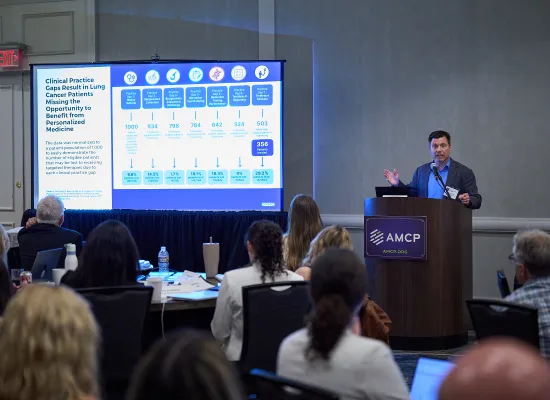
In June 2026, AMCP convened stakeholders across managed care, patient advocacy, life sciences, and research in Alexandria, VA, for its Partnership Forum, From Insights to Impact: Advancing the Use of Patient Experience Data (PED) in Payer Decision-Making.

Participants examined a central question: as PED become more widely generated, how can it be more consistently evaluated and applied within payer decision-making frameworks?
Through two days of working sessions, discussions focused on practical considerations for positioning PED as decision-relevant evidence. Participants explored ongoing challenges related to integration, communication, and evidentiary expectations, while identifying opportunities that may support more consistent use in practice.
The following takeaways reflect key themes identified during the forum.
Participants noted that PED are increasingly generated and recognized across the healthcare landscape. However, its incorporation into payer decision-making continues to vary in practice.
Participants emphasized that advancing PED may depend on greater clarity in how these data can be evaluated alongside traditional evidence types and recognized an ongoing gap between availability and application of PED.
While stakeholders broadly acknowledge the importance of incorporating the patient voice, integration into established workflows may be limited by operational and contextual considerations.
Participants highlighted that defining the value of PED remains a central consideration for its use in payer contexts.
Discussions emphasized that value is not inherent, but rather interpreted within the context of decision-maker needs. Factors such as clinical relevance, impact on health outcomes, population-level applicability, and timing within the decision lifecycle were consistently identified as important considerations.
Participants noted that positioning PED within these parameters may help align patient-derived insights with established evidentiary expectations and support more consistent consideration in payer assessments.
Participants emphasized that limitations in the use of PED are often related less to data availability and more to how data are communicated.
Participants highlighted that more structured approaches, including patient experience dossiers and the AMCP Format, may help improve clarity and access.
Standardized communication pathways may support more efficient interpretation and facilitate integration into decision-making processes.
Participants identified trust as a central factor influencing whether PED are incorporated into decision-making.
Discussions highlighted that credibility may be strengthened through transparent data collection practices, methodological consistency, and clear articulation of potential applications in real-world contexts. At the same time, variation in how PED are generated and interpreted may contribute to uncertainty among decision-makers.
Participants emphasized that further alignment on what constitutes “fit-for-purpose” PED may help support confidence and more consistent use across payer environments.
Participants consistently highlighted the importance of sustained collaboration across stakeholder groups.
The Partnership Forum model provides a structured environment to examine shared challenges, including defining value, improving communication, and addressing evidentiary expectations. By bringing together diverse perspectives, participants are able to identify areas of alignment and explore practical approaches to common barriers.
Participants noted that continued cross-sector engagement may help inform future guidance, tools, and research priorities that support the evolving role of PED in payer decision-making.
Participants noted that the field continues to evolve from recognizing the importance of PED to exploring how it may be more consistently applied in practice.
Progress in this area may depend on:
AMCP's role in convening stakeholders and advancing these discussions can help support the development of practical, evidence-informed approaches to integrating PED into payer decision-making. These efforts build upon a growing body of AMCP thought leadership focused on patient-centered evidence, value assessment, and payer decision-making.
Interested in learning more about how Patient Experience Data can inform payer decision-making?

AMCP offers a wide variety of educational opportunities, from events and webinars to online training.