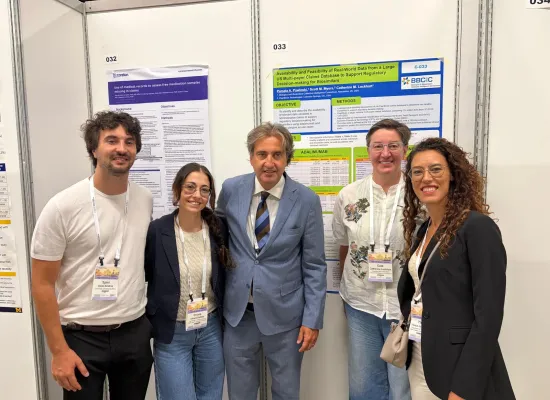
Last week, AMCP Principal Research Scientist Pam Pawloski, PharmD, BCOP, FCCP, presented a project poster at ISPE 2026 in Milan, where she and Cate shared early findings and connected in person with our research collaborators from Italy and Denmark.
Advances in medicine, evolving health care policies, and economic challenges brought thousands of professionals from health plans, pharmacy benefit managers (PBMs), pharmaceutical manufacturers, and other managed care organizations to San Diego, California, Oct. 26–29, for AMCP Nexus 2026. Over four days, attendees discussed issues shaping managed care pharmacy and their implications for patient care.
Explore Advances in Medicine and Managed Care
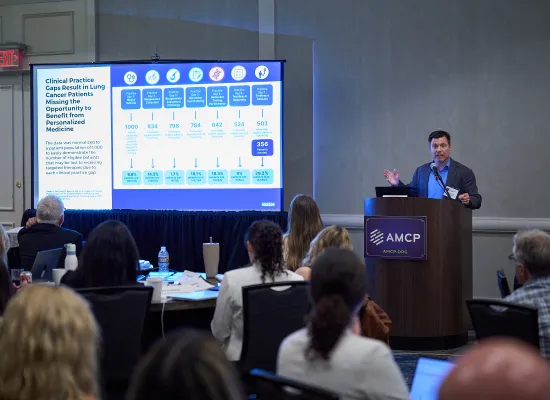
The Opening General Session featured physician-scientist and author Eric Topol, MD, who discussed how artificial intelligence (AI), genomics, and precision medicine could influence treatment decisions and patient care.
Among the meeting's most attended sessions were the keynote “America's Next Top Model?” and the “Federal Legislative and Regulatory Update,” which addressed modeling and federal policy issues relevant to managed care pharmacy.
Other well-attended sessions included “Beyond Drug Cost: The Models, Tradeoffs, and Decisions Behind Coverage” and “The Evolving Role of Patient Experience Data in Formulary and Coverage Decision-Making,” highlighting the financial and patient-centered considerations that inform coverage policies.
Pre-conference programming addressed policy, financial, and professional development priorities. The AMCP Pharmacy Policy Summit brought together policy experts and stakeholders to discuss the 340B Drug Pricing Program, Most Favored Nation drug pricing approaches, cell and gene therapy financing, direct-to-consumer programs, Medicare Advantage, and state-level policy developments.
The Health Plan Economics Masterclass focused on financial risk, benefit design, and coverage decisions across commercial, Medicare, and Medicaid plans, while the Residency Program Design and Conduct workshop addressed accreditation standards and strategies for strengthening managed care pharmacy residency programs.
The closing oncology pipeline session explored advances in cancer treatment and how clinical evidence and costs influence payer coverage and reimbursement decisions.
Strengthen Professional Relationships Through Shared Experiences
The Expo Hall offered a dynamic setting for attendees to connect with industry representatives, explore new products, technologies, and services, and exchange perspectives on developments shaping the profession.
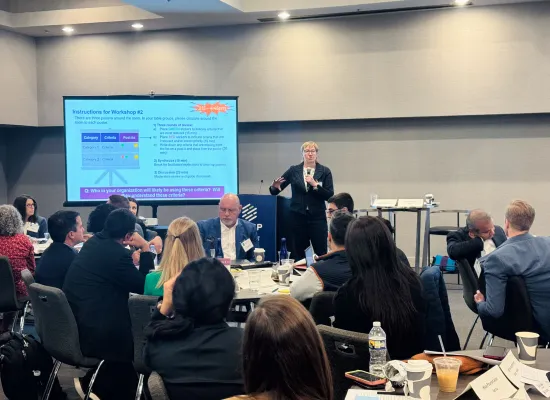
More than 350 research posters presented findings relevant to managed care pharmacy. Moderated Poster Tours gave attendees the chance to discuss selected studies directly with researchers, while Spotlight Sessions and Satellite Symposia offered additional educational programming on therapies, technologies, and clinical topics.
AMCP affiliate meetings brought regional members together, while the Student and New Practitioner Networking Event and Residency and Fellowship Showcase helped early-career professionals build relationships and learn about career paths.
The AMCP Foundation supported the next generation of managed care pharmacy professionals through student awards and scholarships. The 2026 HBCU Travel Award recipients, Bekalu Walle of Texas Southern University and Lacy Myers of Florida A&M University, received support to attend Nexus. The Foundation also awarded Cathy A. Carroll Scholarships to Trent Bishop of the University of North Carolina at Chapel Hill and Rabia Asjid of the University of Maryland, Baltimore, supporting their interests in health economics and outcomes research and, as well as the pharmaceutical industry.
AMCP's Champions of the Year, Elena Marchese, Kimberly Lenz, PharmD, MBA, FAMCP, and Veeral Vyas, PharmD, RPh, PACS, PLCS, SBCS, were recognized for helping grow the association's professional community.
Carry the Conversations Forward
Eleven key takeaways from AMCP Nexus 2026 highlight research findings, policy developments, and practical considerations discussed throughout the meeting:
AMCP thanks the sponsors of AMCP Nexus 2026 for their support and commitment to managed care pharmacy. Their partnership helped make this year's meeting possible.
Continue the conversation at AMCP 2027, where managed care pharmacy professionals will gather to share insights and address the issues shaping the profession.
Sponsorship and exhibiting opportunities are already available, and registration opens on Dec. 8, 2026, for AMCP members and Dec. 10, 2026, for the general public. Join AMCP to save up to $400 on conference registration, and students save more than $1,000 off the full, non-member registration!
AMCP offers a wide variety of educational opportunities, from events and webinars to online training.