

What is Epidermolysis Bullosa (EB)?
EB is a group of rare, chronic genetic disorders that affect the adhesion of epithelial layers.1 It is characterized by extreme fragility of the skin and internal mucosa.1 The genetic variations in EB compromise proteins responsible for skin structure and repair, so the usual healing process is disrupted, resulting in difficulties with wound healing.1
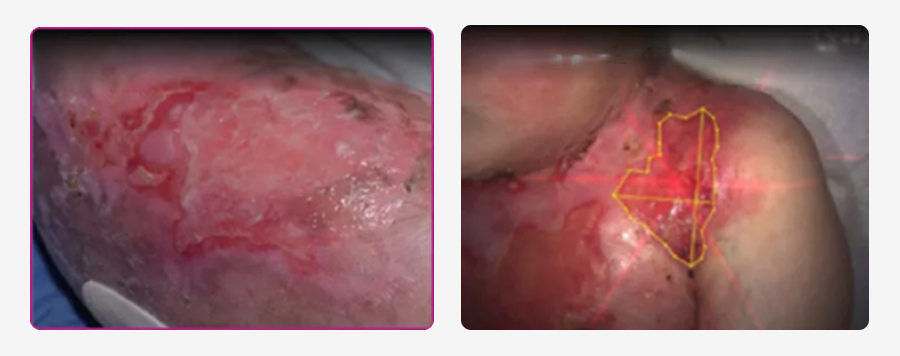
Even minimal friction causes painful blisters and open wounds, which can affect a large percentage of the body surface area. For example, patients with more severe types of EB can have more than 30% of their body surface area covered by wounds.3 In EB, wounds can occur on any part of the body, especially high friction points such as hands, feet, and knees.4,5
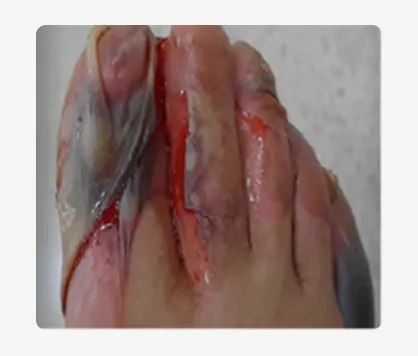
Recurrent wounding, inflammation, and infection reinforce a state of impaired wound healing that contributes to a chronic burden of open wounds on the body surface.6
What are the types of EB?
EB is categorized into 4 main types based on the layer of skin where cleavage occurs4:
- Dystrophic EB (DEB)
- Junctional EB (JEB)
- Kindler EB (KEB)
- EB simplex (EBS)
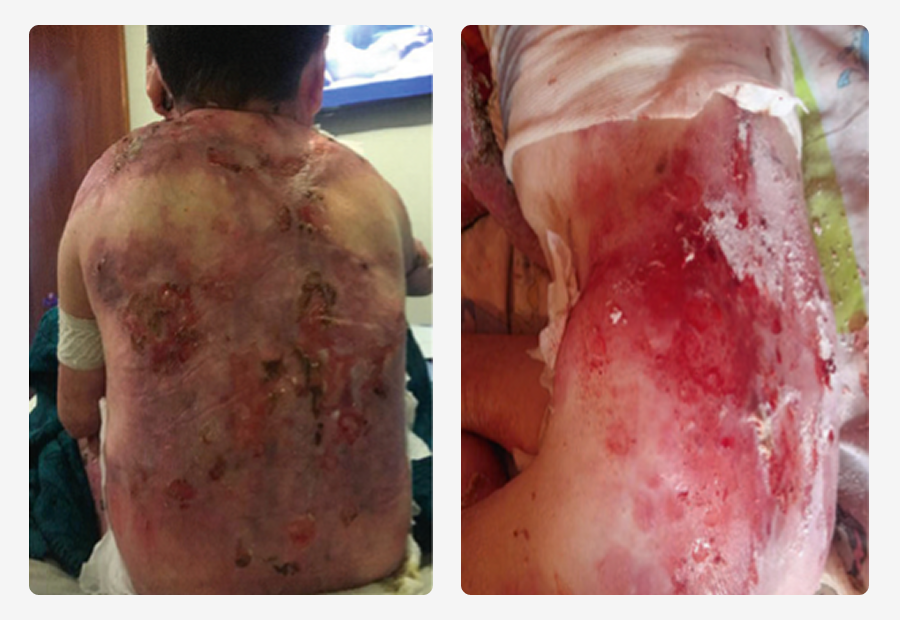
JEB and DEB are the most severe types of EB and are associated with significantly higher morbidity and mortality.6 In these EB types, wounds can cover a large proportion of the body surface.3 In one study, among patients with DEB or JEB, the proportions with wounds covering >30% of their body surface area include3:
- 57.9% of patients with recessive DEB (RDEB)
- 35.7% of patients with dominant DEB (DDEB)
- 25.0% of patients with JEB
What is the impact of EB?
Currently, an estimated 3793 people are living with EB in the United States. Of these, approximately 1117 have DEB and 168 have JEB.7,8
Patients with EB are predisposed to burdensome, potentially fatal clinical manifestations, including deformities like contractures and pseudosyndactyly, symptoms like pain and pruritus, and complications like sepsis and squamous cell carcinoma.6 In severe disease, mucosal fragility in any epithelial-lined organ may result in erosions, ulcerations, and scarring, as well as risk of malignancy and shortened life expectancy.4,6
EB wounds can have a devastating impact on both patients and caregivers. Dressing changes are extensive, frequent, time-consuming, and painful, with wound care that can take up to several hours and be needed 2 or 3 times per day.3,9 Many patients require additional medications to help relieve the pain and anxiety associated with dressing changes.9 According to patients and caregivers3,†
- 32% of patients have >30% of body surface wound coverage3,‡
- 78% of patients with JEB or DEB require dressing changes every 1 to 2 days3,‡
- 37% of patients with RDEB spend >4 hours per day changing dressings3,‡
- 66% of patients always required assistance with their wound care regimens from caregivers3,§
Wound complications in EB drive substantial healthcare resource utilization, including costs related to wound dressings, medications, hospitalizations, and healthcare professional visits.10 A review of the costs of EB in Europe and the US reported annual mean total costs of up to $97,727 per patient, with up to $5651 in wound care costs, $10,246 in out-of-pocket expenditures, $53,195 in home care costs, and $31,087 in indirect costs such as loss of earnings.11
Another retrospective study in the US found that from 2016 to 2020, the mean (SD) total medical cost per patient with EB per year was $23,609 (±$50,710) in 2019 US dollars.10 For patients with DEB, costs can be up to $73,000 per patient per year.10 On top of direct medical costs, wound dressings alone can cost up to $245,000 per patient per year, with a mean annual cost of $4705 (±$13,202) being covered by insurers.10,* Additionally,
- The majority of patients are prescribed antibiotics (56.6%) and anti-itch medications (50.7%), and nearly half of patients are prescribed pain medications (48.3%)10
- Approximately 98% of patients had at least 1 ambulatory visit10
- Almost 1 in 4 patients had an emergency department visit10
- Another 1 in 4 had an inpatient stay10
- Approximately 42% of patients used home health services10
How is EB treated?
Current consensus-based treatment guidelines for EB focus on palliative care by a multidisciplinary team.2 Ongoing topical wound care is at the core of treatment to manage the chronic burden of open wounds.1,2 While there is no cure for EB, there are EB-specific wound care treatments that are approved by the FDA for patients with certain subtypes of EB.1,2 Some wounds may require multiple types of dressings and/or multimodal care, tailored to the type of EB and the wound characteristics.12,13
*A retrospective cohort study of 412 patients with DEB or EB unspecified in the Optum Claims Market Clarity database from January 1, 2016, to December 31, 2020, with costs standardized to 2019. Estimated out-of-pocket and covered costs of wound care for a hypothetical 10-year-old child with EB with average wound skin coverage.10
†Survey: 156 responses were received from patients (n=63) and caregivers (n=93) representing the EB types of EBS, JEB, and DEB.3
‡Reported by patients.3
§Reported by caregivers.3
References
1. Andreou S, Sarsam S, Murrell DF. Understanding the efficacy and tolerability of topical therapies for epidermolysis bullosa. Expert Rev Clin Pharmacol. 2026;19(3):269-273. doi:10.1080/17512433.2026.2641138
2. Popenhagen MP, Genovese P, Blishen M, et al. Consensus-based guidelines for the provision of palliative and end-of-life care for people living with epidermolysis bullosa. Orphanet J Rare Dis. 2023;18(1):268. doi:10.1186/s13023-023-02870-8
3. Bruckner AL, Losow M, Wisk J, et al. The challenges of living with and managing epidermolysis bullosa: insights from patients and caregivers. Orphanet J Rare Dis. 2020;15(1):1. doi:10.1186/s13023- 019-1279-y
4. Has C, Liu L, Bolling MC, et al. Clinical practice guidelines for laboratory diagnosis of epidermolysis bullosa. Br J Dermatol. 2020;182(3):574-592. doi:10.1111/bjd.18128
5. Bardhan A, Bruckner-Tuderman L, Chapple ILC, et al. Epidermolysis bullosa. Nat Rev Dis Primers. 2020;6(1):78. doi:10.1038/s41572-020-0210-0
6. Mellerio JE, Kiritsi D, Marinkovich MP, et al. Mapping the burden of severe forms of epidermolysis bullosa – implications for patient management. JAAD Int. 2023;11:224-232. doi:10.1016/j.jdin.2023.02.016
7. Fine JD. Epidemiology of inherited epidermolysis bullosa based on incidence and prevalence estimates from the National Epidermolysis Bullosa Registry. JAMA Dermatol. 2016;152(11):1231-1238. doi:10.1001/jamadermatol.2016.2473
8. US Census Bureau. Population on a Date: July 20, 2026. Accessed July 20, 2026. https://www.census.gov/popclock/
9. Goldschneider KR, Good J, Harrop E, et al; Dystrophic Epidermolysis Bullosa Research Association International. Pain care for patients with epidermolysis bullosa: best care practice guidelines. BMC Med. 2014;12:178. doi:10.1186/s12916-014-0178-2
10. Feinstein JA, Bruckner AL, Chastek B, Anderson A, Roman J. Clinical characteristics, healthcare use, and annual costs among patients with dystrophic epidermolysis bullosa. Orphanet J Rare Dis. 2022;17(1):367. doi:10.1186/s13023-022-02509-0
11. Grutters L, Teerstra F, van der Werf S, van Asselt ADI, van den Akker PC, Bolling MC. The economic burden of epidermolysis bullosa: a scoping review. Dermatology. Published online May 11, 2026. doi:10.1159/000552148
12. Denyer J, Pillay E, Clapham J. Best practice guidelines. Skin and wound care in epidermolysis bullosa. Wounds International. Published May 2, 2017. Accessed July 27, 2026. https://woundsinternational.com/best-practice-statements/best-practice-guidelines-skin-and-wound-care-in-epidermolysis-bullosa/
13. Paller A, Gonzalez ME, Gorell E, Lee LW. Birch triterpenes as a core component of concomitant therapy in dystrophic epidermolysis bullosa: real‑world experience. Poster presented at: Society for Pediatric Dermatology 2026; July 22-25, 2026; Minneapolis, MN. Poster POS-039.